25 Sep 2026
Connect With Property Event, Cambridge
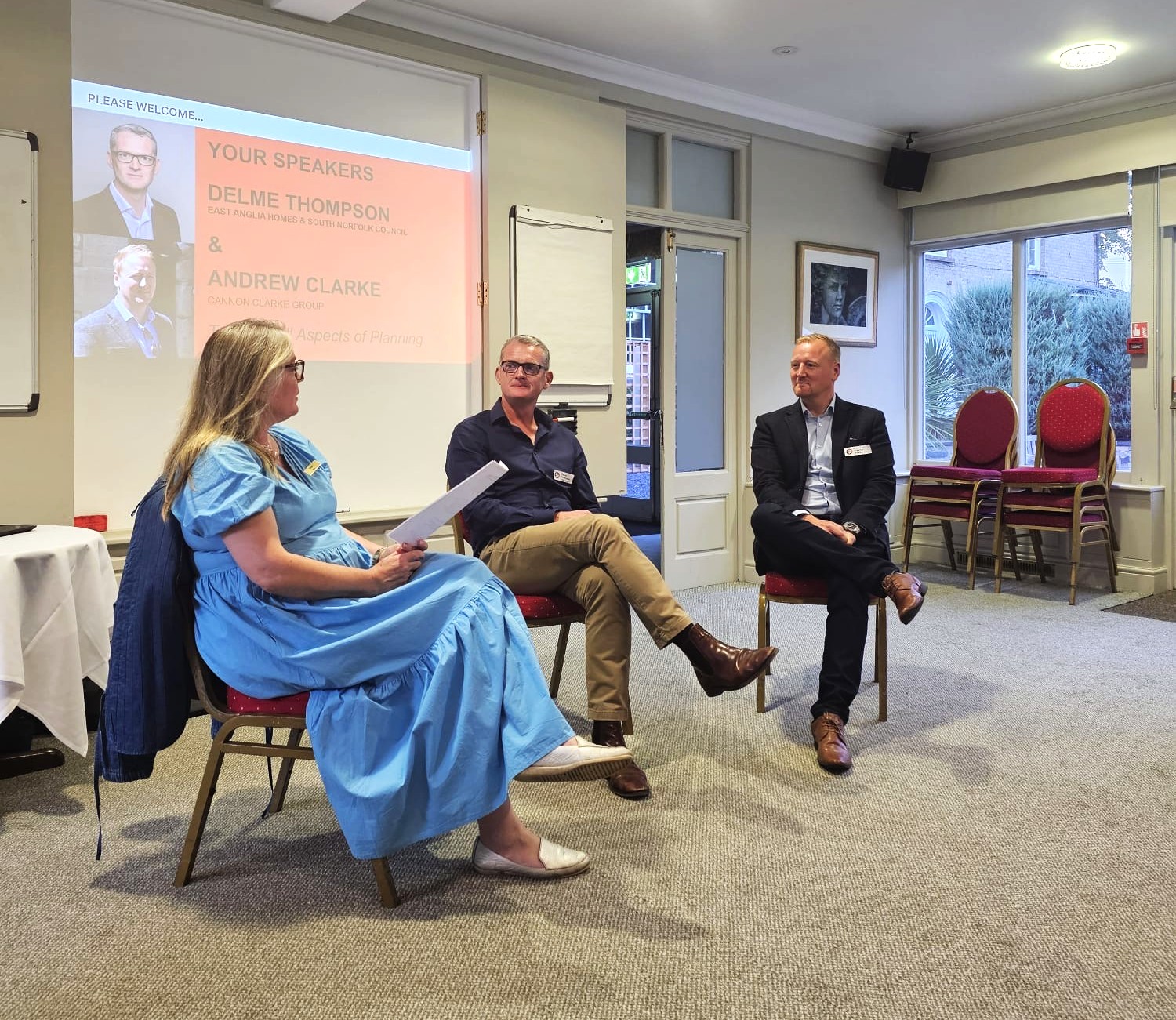
Cannon Clarke Group Director, Andrew Clarke, recently spoke at a Connect with Property networking evening in Cambridge, alongside Delme Thompson.
Held on 1 September 2026, the event brought together property investors, developers, consultants and construction professionals from across Cambridge and East Anglia. The presentation provided a broad overview of the planning, design, technical and contractual decisions involved in delivering a project. Andrew and Delme also worked through a real-life project scenario before taking part in a seated question-and-answer session with attendees.
Many of the problems experienced during construction can be traced back to decisions made much earlier in the project. Andrew explained the importance of developing a clear and realistic brief before progressing with a design to understand what clients want to achieve, how much they can invest and which constraints could affect the project. Early-stage strategic design allows the team to explore different layouts, technical solutions and development options while the design remains flexible. This can help identify opportunities and address potential problems before they become expensive or difficult to resolve.
The presentation also introduced the RIBA Plan of Work, explaining how a project moves from its initial brief and concept design through planning, technical design, construction and completion. Following a structured process gives clients a clearer understanding of the decisions required at each stage.
Planning and Technical Risks
Delme Thompson discussed common planning issues and the obstacles that applicants may encounter when working with local planning authorities. Planning permission is an important milestone, but a consented design must also be technically achievable. Combining planning work with early technical assessment can help ensure that the proposed scheme can be built safely, efficiently and within a realistic budget.
This may include reviewing the site’s physical constraints, access, structure, drainage, utilities, fire safety and Building Regulations requirements. Undertaking these reviews early can reduce the risk of redesign, delays and wasted expenditure later. Good planning outcomes should therefore be considered alongside buildability. Even if a proposal is acceptable in planning terms, it may still require substantial technical development before it is ready for construction.
Procurement Route and Building Contract
Andrew also explained how different procurement routes can affect responsibility, cost, quality and control throughout a project. A suitable building contract provides a clear framework for the relationship between the client and contractor. It should define the agreed scope of work, contract sum, programme, payment process and procedures for managing changes or delays.
Where the design and scope have been properly developed, a fixed-price agreement can provide greater cost certainty. However, that certainty depends on the quality and completeness of the information issued to the contractor. Missing information or late design changes can still lead to additional costs.
Formal contractual arrangements give clients greater financial security and help establish what each party must deliver. This is particularly important when development finance is involved, as extended programmes and delays on site can increase borrowing and holding costs considerably.
Building Regulations
The discussion also considered the difference between regulatory compliance and good-quality design.
Building Regulations establish minimum statutory requirements. Meeting those requirements does not automatically mean a building has been designed to achieve the best standards of performance, longevity, safety or usability available within the project budget. The level of service and technical attention offered by architectural practices can vary. An experienced design team should do more than prepare the minimum information needed for approval. It should help the client understand risk, coordinate technical requirements and make informed decisions throughout the project.
This additional work can represent better value in the long term by reducing uncertainty, avoiding preventable changes and improving the quality of the completed building.
Artificial Intelligence
Andrew also addressed the increasing use of artificial intelligence within planning, design and Building Regulations work.
Although AI can be useful for organising information, supporting research and improving certain workflows, it cannot replace the judgement of an experienced construction professional. Planning policy and technical regulations need to be interpreted in relation to the particular site, building and proposed use. References that appear relevant in isolation may not apply in the same way to every project. Each building also presents its own constraints and opportunities, which require careful assessment.
AI-generated advice can therefore create risk when it is used without the knowledge needed to check its accuracy and relevance. The technology is most effective when it supports experienced professionals rather than replacing their judgement.
Andrew has more than 25 years of experience as an Architectural Technologist and Director within the construction industry. Having worked across a wide range of projects, he has developed a detailed understanding of the approaches that support successful delivery and the decisions that can create avoidable problems.
The presentation aimed to give attendees practical information that could help them approach future projects more safely and confidently. It also demonstrated how investing in a clear brief, strategic design, technical assessment and suitable contractual arrangements can save clients time and money over the full course of a project.
Thank you to Connect with Property for inviting Andrew to speak. Also, thank you to Delme for delivering an informative presentation alongside him.
If you are considering a building or development project and require advice on planning, architectural design, technical delivery or procurement, our team are happy to assist.