21 Sep 2026
Social and Affordable Homes Programme: £9.58bn allocated
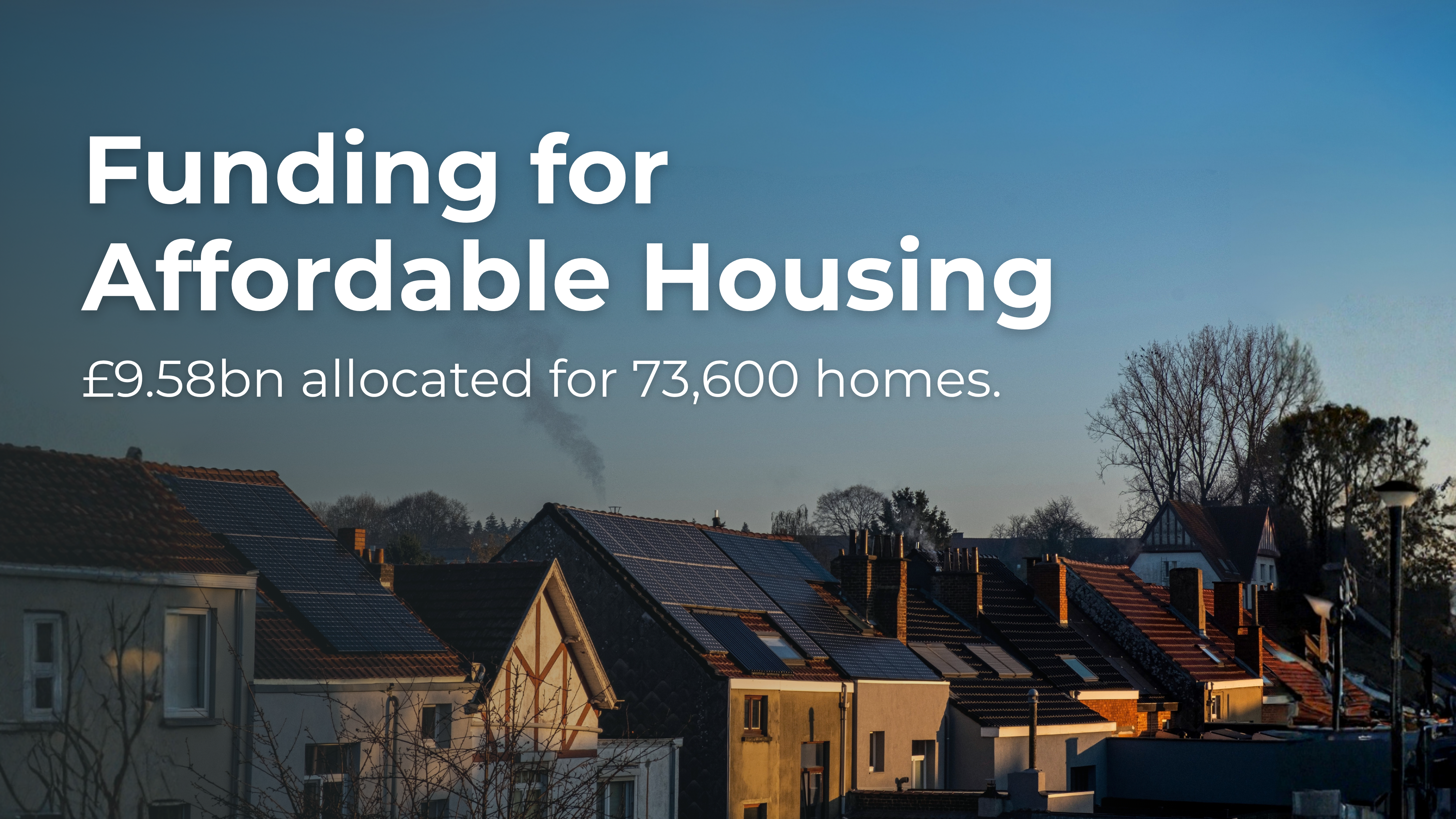
The government has made the first major allocation from its ten-year Social and Affordable Homes Programme, awarding £9.58 billion to councils, housing associations and other providers. This gives them greater certainty over a substantial pipeline of new homes, but the funding is only the beginning. The next challenge is converting programme-level commitments into viable, consented and well-designed schemes that can be delivered within the required timescales.
Funding confirmed for 73,600 homes
Homes England has allocated £9.58 billion to 33 Strategic Partners outside London. The funding will support 73,600 social and affordable homes over the next decade, with nearly two-thirds expected to be for Social Rent. This is the first major allocation from the £39 billion Social and Affordable Homes Programme for 2026 to 2036. More than £16 billion remains available for future allocation outside London. Meanwhile, the Greater London Authority intends to offer at least £6 billion through its part of the programme.
More than £2 billion of the latest funding is expected to support development in mayoral areas outside London. Established Mayoral Strategic Authorities will help set local priorities, although Homes England retains responsibility for final funding and contractual decisions. The government’s funding announcement provides the allocation figures and regional context.
The scale and duration of the awards should help providers plan beyond individual sites. Strategic Partnerships offer longer-term funding certainty and some flexibility over the location and tenure of homes. This may support more coordinated decisions about land, professional appointments and construction procurement. However, the allocation does not represent a construction-ready programme. Individual sites must still progress through land acquisition, design, planning, technical approval, procurement and viability assessments.
Delivery
Homes England will monitor how quickly Strategic Partners turn their allocations into deliverable schemes. All funded homes must start by 31 March 2036 and reach completion by 31 March 2039, subject to contractual terms and future budget availability. Annual performance reviews will consider delivery progress and the identification of suitable sites. By 31 March 2031, partners should have linked at least half of their allocations to identified sites. The programme will also prioritise early completions, particularly homes completed by 31 March 2029.
Meeting these milestones will require evidence of land control, realistic planning programmes, infrastructure requirements, abnormal costs and procurement capacity. A delay or unresolved risk in any one of these areas could prevent allocated funding from becoming an approved and deliverable scheme.
The Continuous Market Engagement route also remains open, allowing eligible organisations to seek funding for individual schemes or portfolios. Homes England’s programme guidance explains the available delivery routes, eligible housing types and principal milestones. The funding announcement also includes a further £46 million for the Capacity to Build programme, which will run from April 2026 to March 2029. This package aims to help councils develop the skills and resources needed to prepare viable housing schemes.
Support includes technical advice, revenue funding for feasibility work and site investigations, and an expanded graduate programme covering planning, surveying and construction project management. The Council Housebuilding Support Service expects to provide up to 225 tailored support packages, while the graduate programme aims to recruit up to 150 people.
Councils may use the funding for early development work, including viability studies, technical due diligence and pipeline preparation. The Capacity to Build guidance provides further information about the support and eligibility requirements.
Design quality and performance
Homes delivered through the Social and Affordable Homes Programme must comply with planning policy, legislation and Building Regulations. This includes requirements relating to ventilation, energy performance and accessibility.
Outside London, Homes England also encourages partners to meet the Nationally Described Space Standard and pursue schemes with no red indicators under Building for a Healthy Life. Providers should align their development principles with Healthy Homes guidance and explain how their wider strategies address sustainability. Although the programme does not introduce a single enhanced national specification, recipients must balance affordability with energy efficiency, overheating resilience, inclusive design, manageable service charges and long-term maintenance.
Architects and consultants can help resolve these requirements early, while there is still scope to influence the layout and specification. Decisions about form, orientation, fabric performance, communal systems and landscape will affect both capital costs and residents’ future expenditure. If these matters only enter the discussion during later value engineering, providers risk reducing quality, increasing operational costs or delaying approval.
Turning funding into deliverable schemes
Organisations receiving funding will now need to test their programmes against realistic planning, infrastructure and procurement timescales. This should include identifying sites capable of contributing to the March 2029 completion priority and reviewing viability assumptions against borrowing costs, construction inflation and abnormal conditions.
Consistent design and performance standards can also support better decisions across a portfolio before individual proposals become too advanced. At the same time, surveys, feasibility work and technical investigations should address uncertainty before it affects planning, procurement or delivery.
The £9.58 billion allocation gives the affordable housing sector something it has repeatedly requested: long-term funding certainty. It provides a stronger basis for assembling land, retaining skilled professionals and building more dependable project pipelines.
The success of the Social and Affordable Homes Programme will ultimately depend on completed homes rather than headline allocations. Providers that combine ambitious programmes with careful site selection, early technical work, realistic viability planning and consistent design standards will be in the strongest position to turn this funding into lasting results.